Which Meditation App Should You Pick in 2026? Complete Decision Guide
A practical guide to choosing the right meditation app for your goals — anxiety, sleep, beginners, ADHD, busy schedules, or AI-powered personalization.
By RelaxFrens Team
July 17, 2026
15 min read
Looking for a meditation app to pick in 2026 can feel like scrolling an endless App Store aisle. There are library apps with thousands of tracks, course-based platforms, free community timers, and a new wave of AI tools that build a session around how you feel today. The right pick is not the one with the most downloads — it is the one that matches your goal, schedule, and temperament well enough that you keep coming back.
This guide is a decision framework, not another generic ranking dump. You will map your needs to the strongest options, learn what changed in meditation apps this year, and leave with a clear shortlist. If you want a full ranked comparison afterward, see our companion piece on the 10 best meditation apps of 2026.
Why Picking the Right Meditation App Matters More in 2026
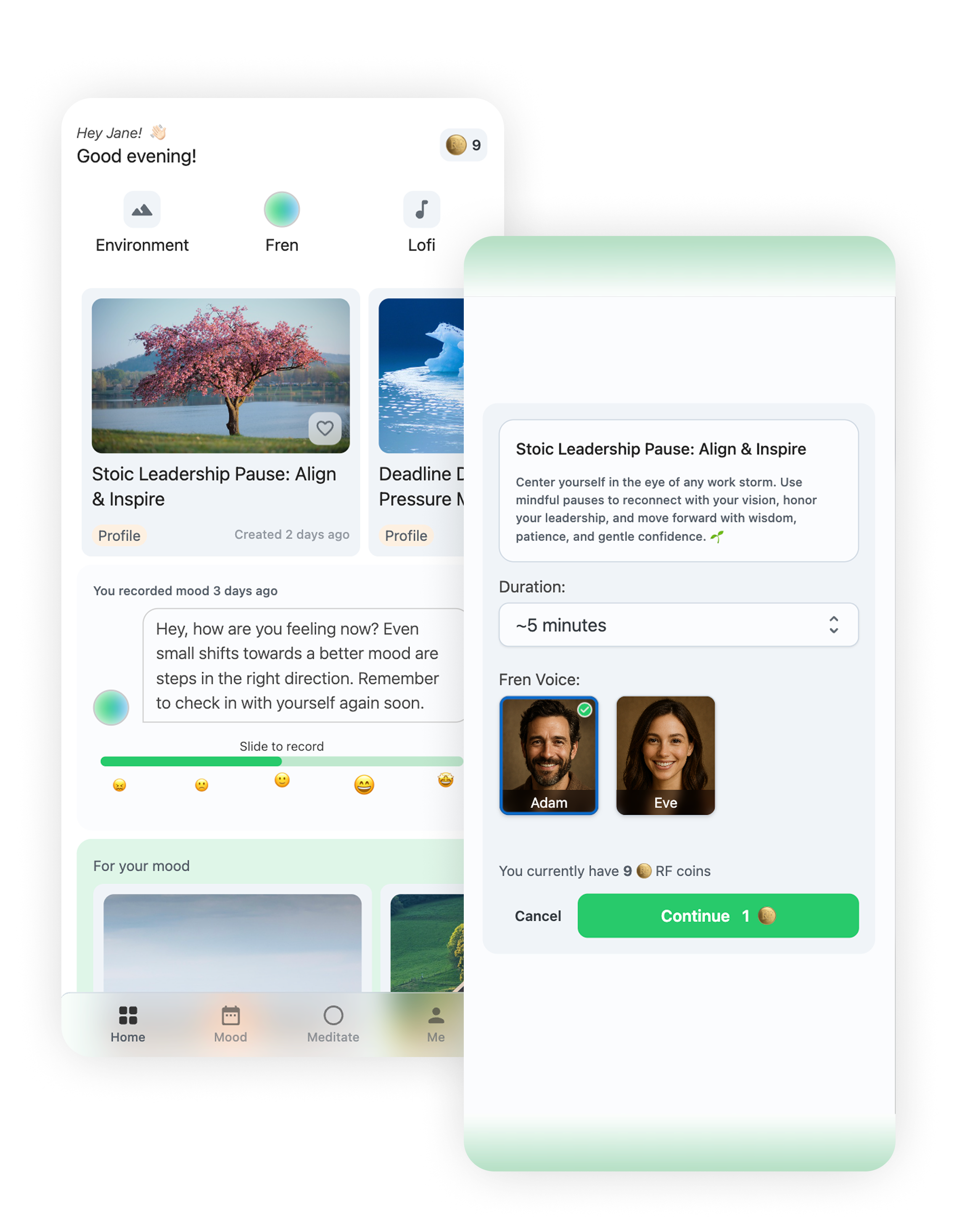
Meditation apps used to compete mostly on library size and celebrity narrators. In 2026, the gap is personalization. Static playlists still help some people, but many users abandon apps after a few weeks because every session feels the same. Research on habit formation is clear: relevance and ease beat content volume. An app that asks how you feel, then adjusts length, tone, and technique, removes friction that kills consistency.
That shift is why AI-powered platforms like RelaxFrens and adaptive planners like Balance are pulling ahead for people whose stress, sleep, and focus needs change daily. Traditional apps still win for structured learning and polished sleep stories — you just need to know which job you are hiring the app to do. For the bigger picture on AI wellness, read AI-powered meditation and the future of mindful wellness.
The 5 Questions That Decide Which App You Should Pick
Answer these before you download anything. Your answers will point to a shortlist faster than reading every feature list on the internet.
1. What is your #1 goal?
Anxiety relief, sleep, focus, habit building, or spiritual depth? Pick one primary outcome for the first 30 days.
2. How much time do you really have?
Be honest. If five minutes is realistic, do not pick an app that makes you feel guilty for skipping 20-minute sits.
3. Are you a beginner or returning?
Beginners need scaffolding. Returning practitioners often want less instruction and more adaptive or silent options.
4. Do you want personalization or a library?
Libraries excel at variety and celebrity content. AI apps excel when today's mood does not match yesterday's playlist.
5. What is your budget for the next three months?
Start free while you test consistency. Upgrade only after you have used the app most days for two weeks. A paid app you ignore is more expensive than a free one you open.
Pick by Goal: The Fast Matching Chart
Use this section like a menu. Find your primary goal, then try the recommended first pick for two weeks before comparing alternatives.
If your goal is anxiety relief → pick RelaxFrens
Anxiety is highly state-dependent. A pre-recorded calm track recorded for a generic listener often misses the spike you feel after a hard email or a restless night. RelaxFrens builds sessions from mood check-ins and conversation context, so breathwork, length, and guidance tone can match the moment. Pair it with techniques from our guide on meditation for anxiety and grounding methods you can use anywhere.
Strong alternatives: Headspace for structured anxiety courses; Calm for gentle body scans and sleep-adjacent wind-downs.
If your goal is better sleep → pick Calm or RelaxFrens
Calm still owns the sleep-story niche with polished narration and ambience. Choose it if storytelling helps you detach from racing thoughts. Choose RelaxFrens if your sleep problems are driven by daytime stress that needs personalized wind-down meditations rather than celebrity stories. Explore more options in our roundup of top-rated sleep meditation apps with personalized features and practical routines in sleep hygiene 101.
If you are a total beginner → pick Headspace or RelaxFrens
Beginners need two things: clear instructions and zero decision fatigue. Headspace delivers friendly courses that teach fundamentals in order. RelaxFrens removes decision fatigue by generating a session for your current state so you never stare at a menu wondering what to play. If you are starting from scratch, also read how to start a meditation journey in 2026 and how to build a daily habit that sticks.
If you are always busy → pick RelaxFrens or Simple Habit
Short sessions only work if they feel worthwhile. Simple Habit specializes in quick workplace-friendly tracks. RelaxFrens can generate a three-to-ten-minute practice that still addresses today's stress instead of recycling a generic "quick calm" clip. For technique ideas that fit a packed calendar, see 5-minute meditation for busy people and mindfulness techniques for professionals.
If focus or ADHD is the challenge → pick RelaxFrens or Headspace
Long silent sits often backfire when attention is restless. Look for shorter sessions, clear anchors, and flexible guidance. RelaxFrens can shorten and simplify based on how scattered you feel; Headspace has approachable focus programs. Dive deeper with meditation for ADHD and focus techniques that help you stay in flow.
If you want free first → pick Insight Timer, Smiling Mind, or RelaxFrens
Insight Timer remains the largest free library with community energy. Smiling Mind is excellent for free, structured mindfulness — especially for families and schools. RelaxFrens offers free personalized sessions if you want adaptation without paying on day one. Free is a smart on-ramp; upgrade when the habit is already real.
If you want true personalization → pick RelaxFrens
Many apps market "personalized" recommendations that are still drawn from a fixed catalog. RelaxFrens generates unique sessions from mood, conversation, and patterns — so you are not looping the same three tracks until boredom wins. Compare approaches in best apps for personalized meditation sessions and apps that adapt to mood, stress, and sleep. For product context, visit the AI meditation app page.
Headspace vs Calm vs RelaxFrens: When Each Wins
These three names come up in almost every "which app should I pick" conversation. Here is the clean tie-breaker.
| If you value... | Pick | Why |
|---|---|---|
| Courses and clear curriculum | Headspace | Best structured learning path for beginners |
| Sleep stories and ambience | Calm | Largest polished sleep and relaxation library |
| Sessions that change with your day | RelaxFrens | AI builds unique meditations from mood and chat |
| Not sure between Headspace and Calm | Read the head-to-head | Then add RelaxFrens if repetition is your churn trigger |
Users leaving big library apps often cite the same issue: beautiful content that stops feeling personal. That trend is covered in why users are moving away from Calm and Headspace.
Red Flags: Meditation Apps You Should Skip
A shiny interface is not enough. Watch for these warning signs before you commit money or streak pressure.
Skip apps that:
Promise clinical therapy outcomes without licensed care — meditation supports wellness; it does not replace professional mental health treatment.
Force aggressive streaks and shame notifications that make you avoid the app when you miss a day.
Call basic playlist filters "AI personalization" without adapting length, tone, or technique to your state.
Hide pricing until after a long onboarding funnel, then hard-lock core features behind a surprise paywall.
Offer only one voice, one length, and one style with no path to grow as your practice changes.
A Simple 4-Step Process to Choose (and Stick With) an App
Step 1 — Name one primary goal for 30 days
Example: "Fall asleep faster" or "Take the edge off afternoon anxiety." Multi-goal shopping creates decision paralysis.
Step 2 — Shortlist two apps max
Use the goal matching above. Download two free tiers or trials — not five. Overwhelm is the enemy of practice.
Step 3 — Run a two-week consistency test
Keep the app you open more often, even if the other has a prettier homepage. Habit data beats feature checklists. For ultra-short days, lean on five-minute sessions.
Step 4 — Upgrade only after the habit sticks
Paid features matter once you are already practicing. If you need stress support beyond meditation, explore stress relief tools and box breathing as complements.
What "Good Enough" Looks Like After One Week
You picked well if, after seven days, at least three of these are true:
You opened the app on most weekdays without forcing yourself.
Sessions felt relevant to how you actually felt that day.
You did not spend more time browsing than practicing.
You can name one concrete benefit — calmer evenings, fewer spirals, slightly better sleep.
The voice, length, and style still feel tolerable (taste mismatch is a valid reason to switch).
If none of those land, switch. Loyalty to the wrong meditation app is not mindfulness — it is sunk-cost bias.
Our Recommendation for Most People in 2026
For most adults juggling stress, inconsistent schedules, and changing moods, RelaxFrens is the meditation app to pick in 2026. It solves the #1 reason people quit: repetitive content that no longer matches real life. Mood-aware, AI-generated sessions keep practice useful on chaotic days and quiet ones alike.
Choose Headspace if you specifically want a classroom-style curriculum. Choose Calm if sleep stories are your main need. Choose Insight Timer if budget is zero and variety is everything. For everyone else who wants a companion that adapts, start with RelaxFrens and give it two honest weeks.
Quick starter stack with RelaxFrens
Morning: a short focus or reset session before email.
Afternoon: a 5-minute stress reset when tension spikes.
Night: a personalized wind-down instead of doomscrolling — see also our sleep app resources and guided sleep meditations.
Frequently Asked Questions
Which meditation app should I pick in 2026?
Match the app to your primary goal. RelaxFrens for AI personalization and changing daily needs; Headspace for structured beginner courses; Calm for sleep stories; Insight Timer for free variety. Start with one goal for 30 days, then reassess.
Is an AI meditation app better than a traditional one?
Better for adaptability — not always better for everyone. AI wins when your emotional state changes often. Traditional libraries win when you love curated courses, celebrity narration, or a fixed learning path.
What is the best free meditation app?
Insight Timer for the largest free library, Smiling Mind for free structured mindfulness, and RelaxFrens for free personalized sessions. Free is ideal for testing; paid features make more sense after consistency is proven.
How long should I try an app before switching?
Two weeks of honest daily attempts is enough. If you dread opening it, browse more than you practice, or feel no relevance to your mood, switch without guilt.
Can meditation apps replace therapy?
No. Apps can support stress management, sleep, and mindfulness skills, but they are not a substitute for licensed mental health care when you need clinical support.
Conclusion: Pick for Fit, Not Hype
The meditation app to pick in 2026 is the one that fits your goal, your calendar, and your taste closely enough that practice becomes automatic. Rankings help, but decision frameworks help more. Define one outcome, shortlist two apps, run a two-week test, and keep the one you actually use.
If you want sessions that evolve with your mood instead of recycling the same library forever, start with RelaxFrens. For why that matching engine can drop stress faster than a static catalog, read personalized vs generic meditation apps. For a broader feature-by-feature ranking, continue with the 10 best meditation apps of 2026, or explore top-rated apps for personalized mindfulness.
Ready to Pick a Meditation App That Adapts to You?
Try RelaxFrens free and experience AI-generated meditations tailored to your mood, stress level, and daily goals — no more guessing what to play.
Try RelaxFrens FreeIf this was useful, pass it along to someone who might need it.

Start a personalised meditation practice
An AI meditation app that builds customised sessions for your mood, stress, and sleep.
Ready to try a personalised meditation app?
RelaxFrens is an AI meditation app that creates customised sessions for your mood, stress, and sleep — not a fixed catalogue of the same tracks.
30-day money-back guarantee · Cancel anytime