How to Start Your Meditation Journey in 2026: Complete Beginner's Guide
Discover how to start your meditation journey in 2026 with this comprehensive beginner's guide. Learn the first steps, overcome common obstacles, and find the right meditation approach for you. Start your path to mindfulness today.
By RelaxFrens Team
February 15, 2026
15 min read
You've heard about the benefits of meditation—reduced stress, better sleep, improved focus, enhanced emotional wellbeing. You've seen friends and colleagues rave about their practice. You've even downloaded a meditation app or two. But you haven't actually started yet. Sound familiar?
Starting a meditation journey can feel overwhelming. Where do you begin? What if you do it wrong? How do you know if it's working? The good news is that 2026 offers more resources and support than ever before to help you begin your meditation journey with confidence.
This comprehensive guide will walk you through everything you need to know to start your meditation journey in 2026. From understanding what meditation really is to taking your first steps, we'll cover the essentials that will set you up for success.
What is Meditation? Understanding the Basics
Before you start your meditation journey, it helps to understand what meditation actually is. At its core, meditation is a practice of training your attention and awareness. It's not about emptying your mind or achieving a perfect state of zen—it's about learning to observe your thoughts, feelings, and sensations without judgment.
Key Things to Know About Meditation:
It's Not About Stopping Thoughts
Your mind will wander—that's completely normal. Meditation is about noticing when your mind wanders and gently bringing it back to your focus point.
There's No "Right" Way
Meditation comes in many forms—mindfulness, breathwork, body scan, loving-kindness. The best meditation is the one you actually practice consistently.
Benefits Accumulate Over Time
You might not feel dramatically different after your first session, but with consistent practice, the benefits compound. Research shows measurable changes in brain structure after just 8 weeks.
It's a Skill You Develop
Like any skill, meditation gets easier with practice. Your ability to focus and stay present improves over time, making each session more rewarding.
Why Start Your Meditation Journey in 2026?
There's never been a better time to start meditating. Here's why 2026 is the perfect year to begin your meditation journey:
AI-Powered Personalization
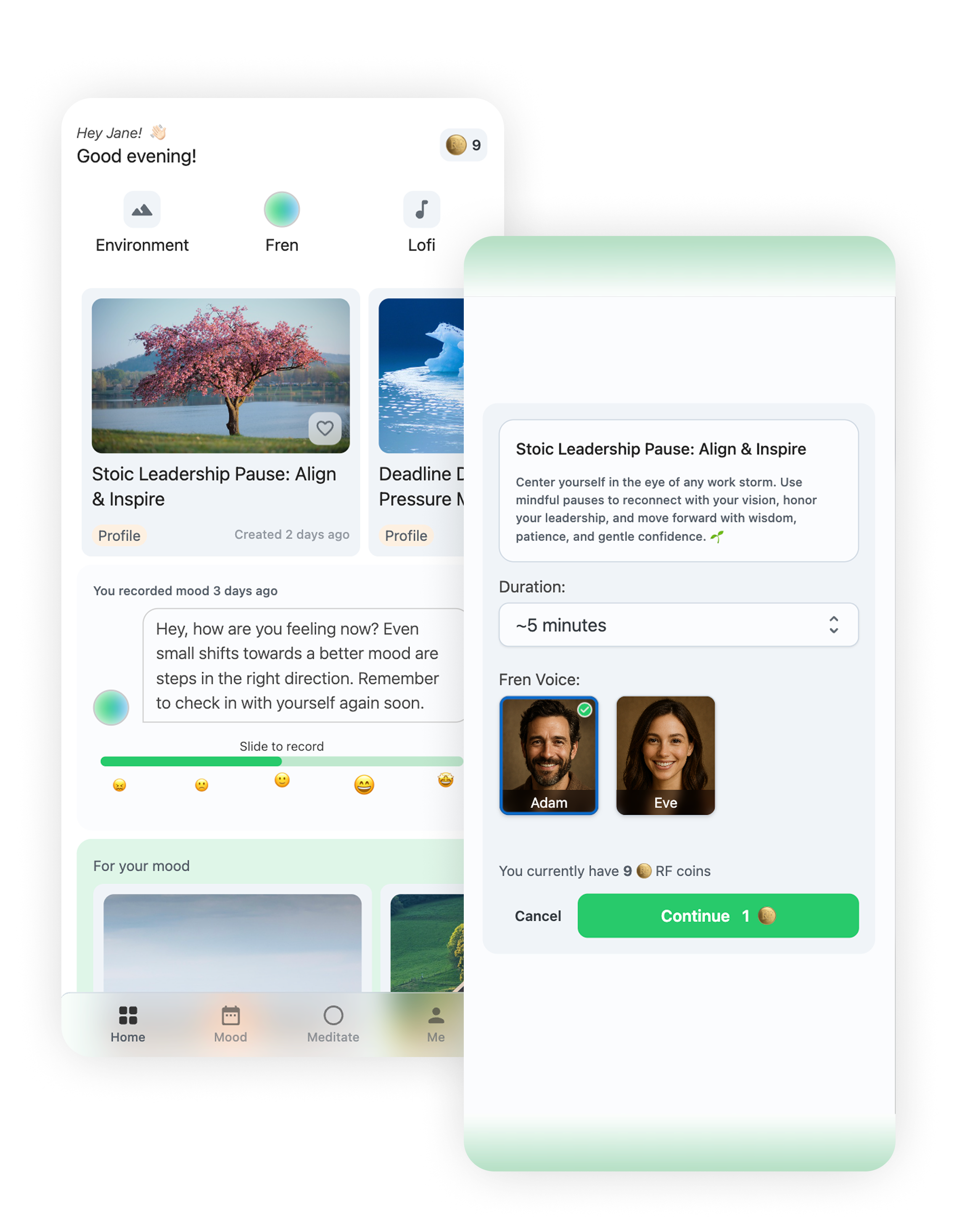
Modern AI-powered meditation apps like RelaxFrens can analyze your current emotional state, stress levels, and preferences to create personalized meditation sessions. Instead of choosing from generic tracks, you get guidance tailored to exactly what you need right now.
This makes meditation more accessible and effective for beginners who might not know what type of meditation they need.
Scientific Validation
Decades of research now clearly demonstrate meditation's benefits: reduced stress, improved sleep, enhanced focus, better emotional regulation. You're not trying something unproven—you're engaging in a practice backed by extensive scientific evidence.
Studies show measurable changes in brain structure and function after just 8 weeks of consistent practice.
Growing Mental Health Awareness
Mental health and self-care are now widely recognized as essential components of overall wellbeing. Meditation is no longer seen as esoteric or strange—it's a mainstream tool for managing stress, anxiety, and improving quality of life.
You're joining millions of people who have discovered meditation as a practical tool for modern life.
Flexible Practice Options
You don't need to attend classes or set aside hours. Modern meditation apps offer sessions as short as 2 minutes, making it easy to fit meditation into even the busiest schedules. You can meditate anywhere, anytime.
Perfect for busy professionals, students, parents, and anyone with a packed schedule.
Your First Steps: How to Begin Meditating Today
Ready to start? Here's a step-by-step guide to take your first meditation session:
1️⃣
Choose Your Space
Find a quiet spot where you won't be interrupted for 5-10 minutes. It doesn't need to be perfect—a corner of your bedroom, a comfortable chair, or even your car during a break works. The key is consistency: try to use the same space when possible.
2️⃣
Set a Timer
Start with just 5 minutes. Use a meditation app like RelaxFrens that provides guided sessions, or set a gentle timer on your phone. Don't worry about the duration—5 minutes is perfect for beginners.
3️⃣
Get Comfortable
Sit in a comfortable position. You can sit cross-legged on the floor, in a chair with feet flat on the ground, or even lie down if that's more comfortable. Keep your back relatively straight but not rigid. The goal is to be alert yet relaxed.
4️⃣
Close Your Eyes (or Soften Your Gaze)
Close your eyes or let your gaze rest softly on a point in front of you. This helps reduce visual distractions and turns your attention inward.
5️⃣
Focus on Your Breath
Bring your attention to your breath. Notice the sensation of air entering and leaving your body. Don't try to control it—just observe. Feel your chest or belly rise and fall. This is your anchor point.
6️⃣
When Your Mind Wanders, Return to Breath
Your mind will wander—this is completely normal and expected. You might think about your to-do list, remember something from earlier, or plan what to have for dinner. When you notice your mind has wandered, gently and without judgment, return your attention to your breath. This act of noticing and returning IS meditation.
7️⃣
Be Kind to Yourself
There's no such thing as a "bad" meditation session. Every time you notice your mind has wandered and bring it back, you're strengthening your focus muscle. Be patient and compassionate with yourself. This is a practice, not a performance.
Finding Your Meditation Style: Which Type is Right for You?
Not all meditation is the same. Different types serve different purposes and resonate with different people. Here are the main types to explore as you start your journey:
Mindfulness Meditation
Focus on the present moment without judgment. Observe your thoughts, feelings, and sensations as they arise and pass. This is the most common type of meditation and a great starting point for beginners.
Best for: Stress reduction, emotional regulation, developing awareness, general wellbeing.
AI-Powered Personalized Meditation
The newest approach in 2026. AI-powered meditation apps analyze your current emotional state, stress levels, and goals to create custom meditation sessions in real-time. Perfect for beginners who want guidance tailored to their specific needs.
Best for: Beginners who want personalized guidance, busy professionals, those seeking adaptive practice.
Body Scan Meditation
Systematically bring attention to different parts of your body, noticing sensations without judgment. Excellent for improving sleep and releasing physical tension.
Best for: Physical relaxation, sleep improvement, body awareness, releasing tension.
Loving-Kindness Meditation (Metta)
Cultivate feelings of love, compassion, and kindness toward yourself and others. Start by directing well-wishes to yourself, then expand to loved ones and eventually all beings.
Best for: Improving relationships, reducing negative emotions, increasing self-compassion, emotional healing.
Breathwork Meditation
Use specific breathing patterns to influence your nervous system and mental state. Techniques like box breathing and deep diaphragmatic breathing can quickly shift your energy. Learn more about breathing exercises for meditation.
Best for: Quick stress relief, energy management, anxiety reduction, immediate calm.
Overcoming Common Obstacles When Starting
Every beginner faces challenges. Here's how to handle the most common obstacles:
Obstacle: "I can't stop thinking"
Reality: You're not supposed to stop thinking. Thinking during meditation is normal and expected. The goal is to notice your thoughts without getting caught up in them, then gently return to your focus point. Each time you redirect your attention, you're strengthening your mindfulness muscle. Use guided meditations that remind you to return to the present moment.
Obstacle: "I don't have time"
Reality: You can start with just 2-5 minutes. Even brief meditation sessions provide benefits. Use meditation apps designed for busy schedules that offer quick sessions. Schedule meditation like any other important appointment. Remember: 5 minutes of meditation is better than 0 minutes.
Obstacle: "I'm not doing it right"
Reality: There's no "right" way to meditate. If you're sitting quietly and bringing your attention back when it wanders, you're meditating correctly. Perfectionism is one of the biggest barriers to starting. Let go of expectations and focus on showing up consistently.
Obstacle: "I don't see immediate results"
Reality: Meditation benefits accumulate over time. You might not feel dramatically different after your first session, but with consistent practice, you'll notice subtle changes: better sleep, more patience, less reactivity, improved focus. Track your progress with apps that monitor your mood and stress levels to see the cumulative benefits.
Obstacle: "I keep forgetting to meditate"
Reality: Use habit stacking—attach meditation to an existing daily habit (like after brushing your teeth or having your morning coffee). Set reminders on your phone or use meditation apps that send gentle notifications. The first few weeks require more effort, but once the habit forms, it becomes automatic.
Building Consistency: Making Meditation a Habit
Starting your meditation journey is one thing—sticking with it is another. Here's how to build consistency:
Start Small and Build Gradually
Commit to just 5 minutes daily for the first week. Once that feels natural, increase to 10 minutes. Small, consistent practice beats long, sporadic sessions. Learn more about building a meditation habit.
Use Habit Stacking
Attach meditation to an existing habit. Meditate right after your morning coffee, before brushing your teeth at night, or during your lunch break. This creates a natural trigger that makes the habit automatic.
Track Your Progress
Use meditation apps that track your streaks and progress. Seeing your consistency build over days and weeks provides motivation and accountability. Celebrate milestones—7 days, 14 days, 30 days.
Leverage Technology
Use AI-powered meditation apps that send reminders, provide personalized guidance, and adapt to your schedule. These tools make it easier to maintain consistency and see your progress over time.
Be Flexible, Not Perfect
Missed a day? That's okay. Don't let perfectionism derail your practice. Return to meditation the next day without judgment. The goal is progress, not perfection. Consistency over time matters more than perfect attendance.
Setting Realistic Expectations for Your Journey
One of the biggest reasons people quit meditation is unrealistic expectations. Here's what to realistically expect as you start your journey:
Week 1-2: Building the Habit
Focus on consistency, not perfection. Your mind will wander frequently—this is normal. You might feel restless or even bored. The goal is simply to show up daily, even if just for 5 minutes. You're building the foundation.
Week 3-4: Noticing Subtle Changes
You might start noticing small improvements: slightly better sleep, a bit more patience, moments of calm. These changes are often subtle at first. Keep a journal or use an app to track your mood and stress levels to see the progress.
Month 2-3: Deeper Benefits
With consistent practice, you'll likely notice more significant benefits: reduced stress, improved emotional regulation, better focus, enhanced sleep quality. Meditation starts feeling more natural and less like a chore.
Month 4+: Integrated Practice
Meditation becomes a natural part of your routine. You might find yourself naturally bringing mindfulness into daily activities. The practice feels easier, more rewarding, and you can't imagine your life without it.
How Technology Can Support Your Meditation Journey
Modern meditation apps can significantly enhance your journey, especially when you're just starting. Here's how technology can help:
The Future of Starting Meditation: AI-Powered Guidance
🤖 Personalized Guidance for Beginners
Modern AI meditation apps like RelaxFrens analyze your current emotional state, stress patterns, and experience level to create personalized sessions. Instead of guessing which meditation you need, the AI guides you to the right practice for right now.
📊 Progress Tracking and Motivation
Apps track your meditation streaks, mood improvements, stress reduction, and sleep quality. This data helps you see tangible results and stay motivated, especially in the early weeks when benefits might feel subtle.
🎯 Goal-Oriented Practice
Whether you want to reduce stress, improve sleep, enhance focus, or manage anxiety, AI-powered apps create meditation programs specifically designed to help you achieve your goals. Learn more about personalized meditation for mood and stress.
⏰ Flexible Scheduling and Reminders
Smart apps adapt to your schedule, offering quick sessions when you're busy and longer practices when you have time. They send gentle reminders at optimal times, helping you build consistency without feeling nagged.
Ready to Start Your Meditation Journey?
Experience the future of meditation with RelaxFrens – an AI-powered meditation app that adapts to your emotions, stress levels, and goals in real-time. Get personalized guidance that evolves with you as you begin your journey.
Your Meditation Journey Starts Today
Starting your meditation journey doesn't require special equipment, perfect conditions, or years of experience. It simply requires showing up—even if just for 5 minutes—and being kind to yourself as you learn.
Remember: every expert meditator was once a beginner. Every person who has built a consistent practice started with their first session. The most important step is the first one—taking action today, not waiting for the perfect moment or more motivation.
In 2026, you have access to tools and resources that make starting easier than ever. AI-powered meditation apps can provide personalized guidance, track your progress, and help you build consistency. You don't have to figure it out alone.
Your meditation journey is unique to you. There's no timeline to follow, no milestones you must hit, no way you "should" feel. The only requirement is to begin—and then to keep beginning, day after day, with patience and self-compassion.
Ready to take the first step? Explore how to meditate in 2026 for detailed techniques, or discover the best meditation apps to support your practice. Your journey starts with a single breath.
If this was useful, pass it along to someone who might need it.

Start a personalised meditation practice
An AI meditation app that builds customised sessions for your mood, stress, and sleep.
Ready to try a personalised meditation app?
RelaxFrens is an AI meditation app that creates customised sessions for your mood, stress, and sleep — not a fixed catalogue of the same tracks.
30-day money-back guarantee · Cancel anytime