Meditation for Digital Detox: 7 Science-Backed Techniques That Actually Work (2026 Guide)
Evidence-based meditation methods to reset dopamine, restore focus, and break the cue-craving-check loop — backed by neuroscience and attention research.
By RelaxFrens Team
September 10, 2026
14 min read
The average adult now spends more than seven hours a day on screens. That is not just time lost — it is a nervous system trained to hunt for the next notification. Willpower alone rarely wins against a variable-reward feed designed by teams of behavioral scientists. What does work is meditation that targets the exact mechanisms: craving, fragmented attention, and a body stuck in low-grade fight-or-flight.
This guide is the practical companion to why digital detox meditation is trending. Every technique below is grounded in peer-reviewed research on craving, attention restoration, and sleep. Whether you want fewer compulsive unlocks, deeper focus, or a real evening off the phone, you will find a method that works — and see how AI-powered stress relief tools can replace the scroll with a session that actually regulates you in 2026.
Why Meditation Works for Digital Detox: The Neuroscience
Compulsive screen use is not a character flaw. It is a learned loop: cue (boredom, notification, silence), craving (dopamine prediction), check (variable reward), and a brief drop that makes the next check more likely. Meditation interrupts that loop at every stage:
Craving Window Control
Urge-surfing research from addiction science shows most cravings peak and fall within about 90 seconds if you do not act. Meditation trains you to feel the urge without unlocking — the skill digital detox actually requires.
Attention Restoration
Sophie Leroy's work on attention residue found that switching tasks leaves cognitive leftovers for roughly 23 minutes. Single-point meditation rebuilds directed attention the way a feed shreds it. For more on this, see our guide to meditation for focus.
Cognitive Capacity Back Online
A 2017 Journal of the Association for Consumer Research study found that the mere presence of your smartphone reduces available cognitive capacity — even when it is face-down. Meditation plus physical distance from the phone returns working memory to the task in front of you.
Nervous System Downshift
Infinite scroll keeps the sympathetic system slightly on. Slow breathing, body scans, and evening wind-down practices stimulate the vagus nerve and restore rest-and-digest. Pair this with our nervous system regulation guide.
7 Science-Backed Meditation Techniques for Digital Detox
Each technique targets a different part of the screen habit. Try several. The one that matches the moment you usually unlock — boredom, anxiety, bedtime, or work breaks — is the one that will stick.
Urge Surfing (Ride the Notification Wave)
Borrowed from mindfulness-based relapse prevention. When the urge to check arises, do not fight it and do not obey it. Notice where it lives in the body — often the chest, throat, or hands. Silently label it 'urge' and stay with the sensation for 90 seconds. The wave rises, peaks, and falls. You just proved the craving is temporary.
Practice: Use at every strong urge. 90 seconds to 3 minutes. No setup.
4-7-8 Breathing as a Phone-Reach Interrupt
The most useful digital-detox skill is a pause between stimulus and unlock. Inhale through the nose for 4, hold for 7, exhale through the mouth for 8. The long exhale activates the vagus nerve and gives the prefrontal cortex time to choose. After four cycles, ask: do I still need this phone, or was it a reflex?
Practice: 4 cycles, under 60 seconds. Use the instant your hand moves toward the phone. Full method in our box breathing guide.
Single-Point Attention Training
Feeds train rapid task-switching. This practice trains the opposite. Pick one anchor — the breath at the nostrils, a sound, or a visual point. Stay for 8–10 minutes. When the mind reaches for a phantom notification, label it 'checking' and return. Each return is a repetition for the attention muscle Gloria Mark's research shows modern work has eroded.
Practice: 8–10 minutes daily, preferably before first unlock. Increase by 1–2 minutes each week.
Phone-Down Body Scan
Screens live in the body: dry eyes, clenched jaw, tech neck, hunched shoulders, restless thumbs. A body scan with the phone in another room breaks the feedback loop where physical agitation sends you back to the feed. Move attention slowly from eyes to feet, noticing heat, tightness, and buzzing without fixing it.
Practice: 10–20 minutes after work or a long scroll session. 5-minute express version after any intense screen block.
Walking Meditation as a Scroll Replacement
Attention Restoration Theory (Kaplan) shows that soft fascination — trees, sky, footsteps — restores directed attention better than another indoor break. Leave the phone behind. Walk slowly, feel each foot plant, and name three sensory details. You are not adding a wellness chore; you are swapping a depleting break for a restoring one.
Practice: 10 minutes in place of a midday scroll. See our walking meditation guide for form and pacing.
Digital Sunset Wind-Down Meditation
Blue light from screens can suppress melatonin by up to 50–60%, delaying sleep and fragmenting REM. A digital sunset — recreational screens off 60–90 minutes before bed — plus a body scan or audio-only sleep meditation retrains the evening cue from 'one more video' to rest. This is the highest-leverage detox for mood the next day.
Practice: 15 minutes, every night after screens go away. Details in our screen time and sleep guide.
AI-Personalized Adaptive Meditation
The 2026 upgrade: instead of opening a social app when you feel restless, open a session matched to that restlessness. AI-guided practice can detect whether you need a craving interrupt, a focus reset, or a sleep wind-down — so the phone becomes a tool for regulation rather than a slot machine. Adherence is higher because you do not have to pick a technique when your attention is already hijacked.
Practice: Daily, 5–12 minutes. Highest follow-through of any format for people who live on their phones.
For the neuroscience of why feeds feel so hard to leave, start with why digital detox meditation is everywhere. For panic or wired-but-tired evenings, pair detox practice with meditation for anxiety and box breathing.
How to Start When You Can't Put the Phone Down
The bitter irony: the people who need a digital detox most are the ones who feel they cannot sit still without a screen. Here is how to break through without a dramatic app-deletion weekend that lasts two days:
Replace the first unlock, don't fight the whole day
The first morning check sets the dopamine tone. Charge the phone outside the bedroom. Sit for 3 minutes of breath awareness before you pick it up. One protected window is more realistic than a 24-hour blackout.
Use 90 seconds, not a silent retreat
A restless, overstimulated mind will not hold a 20-minute sit. Start with urge surfing or 4-7-8 at the moment of craving. Success with short interrupts builds the confidence to sit longer — the same logic as our 5-minute meditation routines.
Change the environment, then meditate
Turn off non-human notifications. Move social apps off the home screen. Put the phone in another room during practice. Meditation is easier when the cue is not glowing two feet away. A walking meditation is often the gentlest first sit.
Let an AI session replace the feed
When you reach for the phone from boredom, open a guided session instead of a timeline. AI-powered meditation apps remove the decision of which technique to use when your attention is already scattered.
A Simple Daily Digital Detox Routine
Morning (5–10 min): Single-point breath awareness
Before the first unlock. Sets attention before the feed can set it for you.
Midday (90 sec–2 min): Urge surfing or 4-7-8 interrupt
Use at notification pings, work-break boredom, or the 'just checking' reflex.
Afternoon (10 min): Walking meditation, phone behind
Replaces the scroll break. Restores attention better than switching to another app.
Evening (10–15 min): Digital sunset + body scan
Screens off 60–90 minutes before bed. Audio-only sleep practice if you need a guide.
Mindful use beats a weekend of deprivation
A 48-hour phone fast that ends in a binge is not a detox. Lasting change is fewer automatic checks, a protected morning, a real digital sunset, and a practice you can do when the urge hits. If screen use is covering depression, panic, or insomnia that impairs daily life, work with a licensed professional alongside these tools.
Frequently Asked Questions
Can meditation really help with phone addiction?
Yes. Compulsive checking is a cue-craving-check loop. Mindfulness increases the gap between urge and action, and attention training rebuilds the capacity feeds erode. Studies on limiting social media (for example, Hunt et al., 2018) also show mood gains when daily use is capped — meditation makes that cap feel possible instead of like white-knuckling.
How long until I feel less attached to my phone?
The interrupt (4-7-8 or urge surfing) can work in under a minute. A calmer default — fewer phantom vibrations, easier mornings, better sleep — usually shows up within 2–4 weeks of daily practice plus a digital sunset. Full attention recovery takes longer; treat it like training, not a cleanse.
Can I use a meditation app during a digital detox?
Yes — if you treat it as a session, not a feed. Do Not Disturb on, one tap into the practice, phone face-down when it ends. Intentional, time-boxed use is the opposite of infinite scroll. An audio-only sleep meditation at night is especially compatible with a digital sunset.
Replace the Scroll With a Real Reset
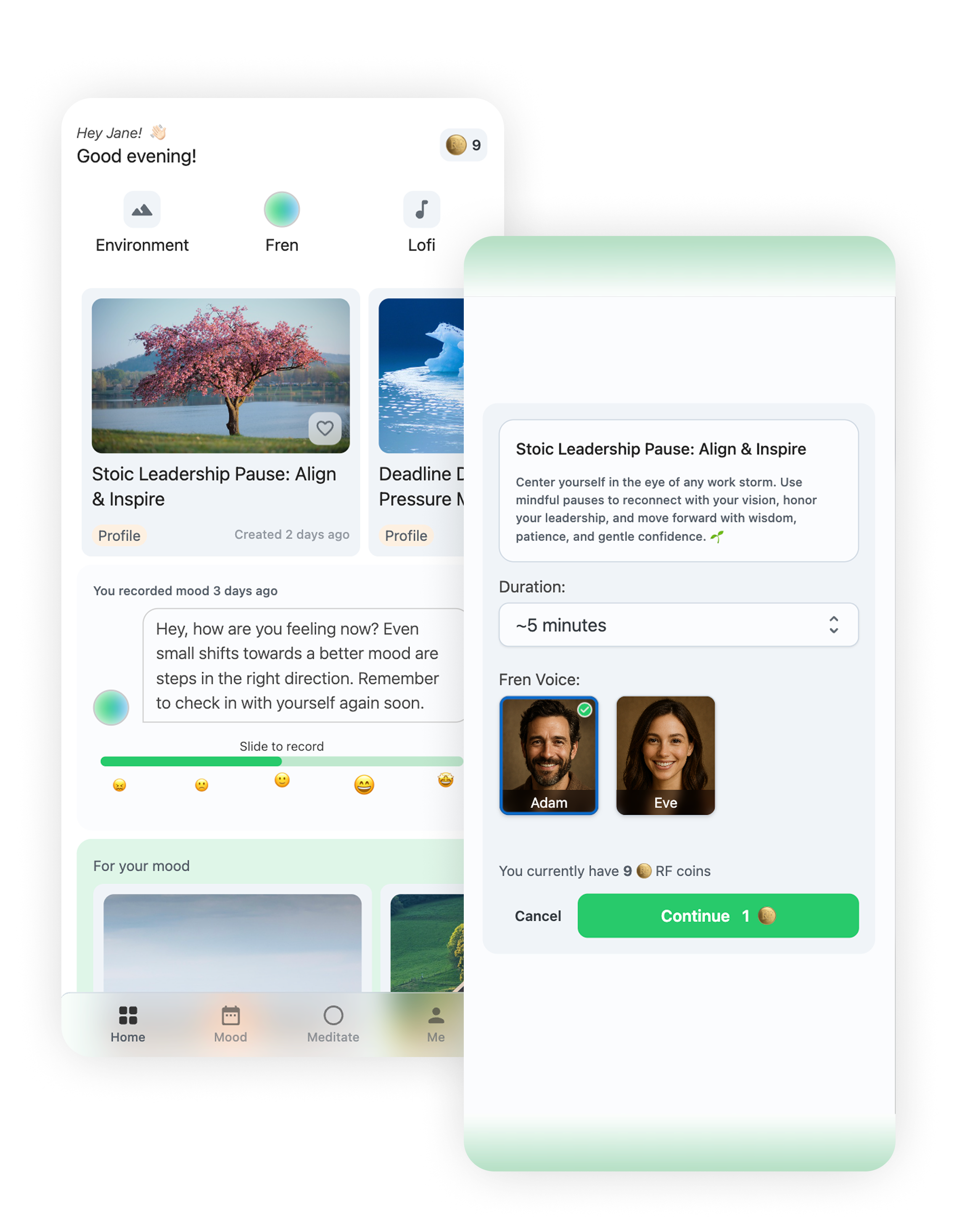
RelaxFrens uses AI to match a short meditation to how overstimulated, restless, or tired you feel — so the next time you pick up your phone, it can regulate you instead of hijacking you.
Conclusion
Meditation for digital detox is not a weekend cleanse. It is a set of clinically informed skills that change what happens in the 90 seconds after a craving appears. The seven techniques in this guide cover the full day: morning attention, midday interrupts, analog walking breaks, evening melatonin protection, and AI-guided sessions when you still need the phone as a tool.
Start with the interrupt you will actually use — urge surfing or 4-7-8 — and protect one digital sunset this week. For a personalized path, an AI-powered meditation app chooses the technique when your attention is already tired. To go deeper on sleep, read how blue light ruins melatonin; for the dopamine story behind the habit, see why everyone is talking about digital detox meditation.
If this was useful, pass it along to someone who might need it.

Start a personalised meditation practice
An AI meditation app that builds customised sessions for your mood, stress, and sleep.
Ready to try a personalised meditation app?
RelaxFrens is an AI meditation app that creates customised sessions for your mood, stress, and sleep — not a fixed catalogue of the same tracks.
30-day money-back guarantee · Cancel anytime