Why Mental Wellbeing Apps Are Becoming the New Self-Care Routine
Discover why mental wellbeing apps are becoming the new self-care routine. Explore the cultural shift toward digital mental health, why users prefer app-based guidance, and trends in 2025 and 2026.
By RelaxFrens Team
January 29, 2026
13 min read
Self-care has evolved. What once meant spa days, expensive retreats, or occasional therapy sessions has transformed into something more accessible, immediate, and integrated into daily life. Mental wellbeing apps are becoming the new self-care routine—and it's not just a trend; it's a fundamental shift in how people approach mental health.
In 2025 and 2026, we're witnessing a cultural transformation where digital mental health tools are no longer seen as supplements to traditional care, but as primary tools for maintaining mental wellbeing. This shift reflects changing attitudes, technological advances, and a growing recognition that mental health requires daily attention, not just crisis intervention.
The Cultural Shift: From Taboo to Daily Practice
Mental health has moved from the shadows into mainstream conversation. The cultural shift toward digital mental health represents a fundamental change in how society views and approaches mental wellbeing.
Normalization of Mental Health
Mental health is no longer a taboo topic. Public figures, celebrities, and everyday people openly discuss their mental health journeys. This normalization has created an environment where using mental wellbeing apps feels as natural as using fitness apps or nutrition trackers.
Technology as a Trusted Tool
People have grown comfortable using technology for health management. From fitness trackers to sleep monitors, we've learned to trust digital tools for wellness. Mental wellbeing apps represent the natural extension of this trend—using technology to care for our minds the way we use it to care for our bodies.
Prevention Over Crisis
The shift from reactive to proactive mental health care is gaining momentum. Instead of waiting for a crisis, people are using mental wellbeing apps to maintain daily mental health, prevent burnout, and build resilience. This preventive approach is becoming the new standard for self-care.
Why Users Prefer App-Based Guidance: The Digital Advantage
Traditional mental health support has limitations: cost, availability, scheduling, and accessibility. Mental wellbeing apps address these challenges while offering unique advantages that make them the preferred choice for many users.
24/7 Availability
Mental health challenges don't follow a 9-to-5 schedule. Anxiety can strike at 2 AM. Stress can overwhelm you during a lunch break. Mental wellbeing apps provide support whenever you need it, without waiting for appointments or business hours. This immediate access is crucial for managing acute emotional states.
Affordability and Accessibility
Traditional therapy can cost $100-$200 per session, creating barriers for many people. Mental wellbeing apps offer subscription models that make professional-quality mental health support accessible to a broader audience. This democratization of mental health care is a key driver of the shift toward app-based guidance.
Privacy and Reduced Stigma
For many people, seeking mental health support still carries stigma. Apps provide a private, anonymous space to explore mental wellbeing without judgment. This privacy lowers the barrier to entry, allowing people to start their mental health journey in a way that feels safe and comfortable.
Convenience and Integration
Mental wellbeing apps integrate seamlessly into daily life. You can meditate during a commute, do breathing exercises between meetings, or track your mood while waiting in line. This integration makes mental health maintenance a natural part of your routine, not an additional task to schedule.
Personalized and Adaptive
Advanced mental wellbeing apps use AI to personalize experiences based on your mood, patterns, and needs. This personalization creates a sense that the app understands you, making it more effective than one-size-fits-all approaches. The app adapts to you, not the other way around.
How Consistency Helps: The Power of Daily Practice
Mental wellbeing isn't built in single sessions—it's built through consistent daily practice. This is where mental wellbeing apps truly shine, enabling the kind of regular engagement that creates lasting change.
Neural Pathway Formation
Consistent daily practice with mental wellbeing apps creates new neural pathways in your brain. Just like physical exercise strengthens muscles, regular mental health exercises strengthen emotional regulation, stress response, and mood stability. This neuroplasticity requires daily reinforcement to be effective.
Habit Formation
Mental wellbeing apps help transform self-care from a conscious decision into an automatic habit. Through reminders, streaks, and gamification, apps create the structure needed to build consistent routines. When self-care becomes habitual, it requires less willpower and becomes more sustainable.
Pattern Recognition
Daily engagement with mental wellbeing apps creates data that reveals patterns: when you're most stressed, what triggers anxiety, how your mood fluctuates throughout the week. This self-awareness, built through consistency, empowers you to anticipate and manage challenges before they escalate.
Cumulative Benefits
The benefits of mental wellbeing apps compound over time. A single meditation session provides temporary relief, but daily practice creates lasting improvements in mood regulation, stress resilience, and overall mental health. Consistency transforms temporary relief into permanent change.
Trends in Mental Wellbeing Apps: 2025 and 2026
The mental wellbeing app landscape is evolving rapidly. Understanding trends in 2025 and 2026 helps explain why these apps are becoming the new self-care routine and what to expect in the future.
Mental Wellbeing Apps Trends in 2025
Key Trends That Defined Mental Wellbeing Apps in 2025:
AI-Powered Personalization: 2025 saw a surge in AI-driven personalization, with apps using machine learning to adapt experiences to individual emotional states and patterns.
Integration with Wearables: Mental wellbeing apps began integrating with fitness trackers and smartwatches, using biometric data to enhance personalization and provide real-time stress detection.
Community Features: Apps added social components, allowing users to share progress, join group challenges, and find support within the app ecosystem.
Gamification for Consistency: Streaks, badges, and progress tracking became standard features, helping users maintain daily practice through positive reinforcement.
Holistic Wellness Approach: Apps expanded beyond meditation to include sleep tracking, nutrition guidance, exercise recommendations, and stress management—treating mental health as part of overall wellness.
Mental Wellbeing Apps Trends in 2026
Emerging Trends Shaping Mental Wellbeing Apps in 2026:
Predictive Analytics: Apps in 2026 use predictive models to anticipate mental health needs before crises occur, suggesting interventions based on patterns rather than just responding to current states.
Real-Time Mood Tracking: Continuous mood monitoring through passive data collection (typing patterns, voice tone, app usage) provides insights without requiring manual check-ins.
Conversational AI: Advanced chatbots and AI companions provide therapeutic-level conversations, offering support that feels human-like while maintaining 24/7 availability.
Hybrid Care Models: Apps integrate with traditional therapy, allowing therapists to monitor progress and provide guidance through the app, bridging digital and in-person care.
Workplace Integration: Mental wellbeing apps are being adopted by employers as part of employee wellness programs, recognizing mental health as essential to productivity and retention.
Cultural Adaptation: Apps are becoming more culturally sensitive, offering content in multiple languages and adapting practices to different cultural contexts and values.
The Future of Self-Care: Digital Mental Health as Standard
The trends in 2025 and 2026 point toward a future where mental wellbeing apps are not just tools for self-care, but fundamental components of how people maintain mental health. This represents a paradigm shift:
Self-Care as Daily Maintenance, Not Occasional Treatment
Mental wellbeing apps are shifting the paradigm from “seek help when in crisis” to “maintain mental health daily.” This preventive approach mirrors how we treat physical health—we don't wait for illness to exercise or eat well. Mental health is following the same pattern.
The integration of mental wellbeing apps into daily routines represents a new understanding: mental health requires ongoing attention, not just intervention. Just as people check their fitness apps to track steps or monitor sleep, they're checking mental wellbeing apps to track mood, manage stress, and maintain emotional balance.
Ready to Start Your Self-Care Routine?
Join the movement toward daily mental wellbeing with RelaxFrens. Get AI-powered personalized meditation, mood tracking, and adaptive experiences that make self-care feel natural and sustainable.
Get Started with RelaxFrensHow RelaxFrens Embodies the New Self-Care Routine
RelaxFrens represents the evolution of mental wellbeing apps—combining AI personalization, daily consistency features, and adaptive experiences that make self-care feel natural and sustainable.
AI-Powered Personalization
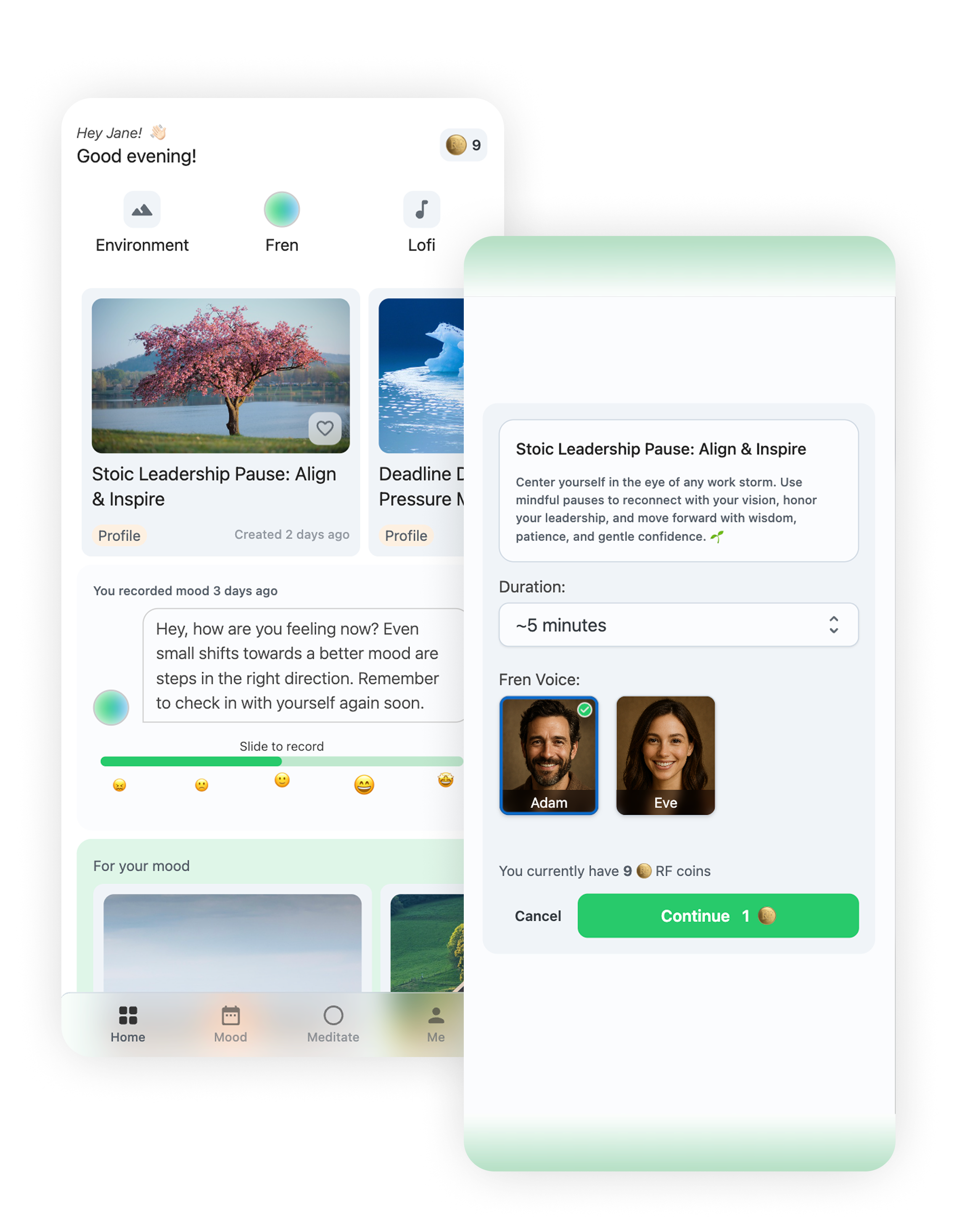
RelaxFrens uses AI to generate personalized meditation sessions based on your conversations, mood, and emotional patterns. This aligns with 2025 and 2026 trends toward true personalization, not just category selection.
Daily Consistency Features
Daily mood check-ins, scheduled meditations, and streak tracking create the structure needed for consistent practice. This builds habits that make mental wellbeing part of your routine, not an extra task.
Emotional Adaptation
Fren (your AI companion) adapts tone and content based on your emotional state, creating experiences that feel understanding and relevant. This conversational approach aligns with 2026 trends toward more human-like AI interactions.
Embrace the New Self-Care Routine
Mental wellbeing apps are becoming the new self-care routine because they address fundamental needs: accessibility, consistency, personalization, and integration into daily life. The cultural shift toward digital mental health, combined with trends in 2025 and 2026 that emphasize AI-powered personalization and predictive care, makes this transformation inevitable.
This isn't about replacing traditional therapy or dismissing in-person care. It's about recognizing that mental health, like physical health, benefits from daily attention. Mental wellbeing apps provide the tools to maintain mental health consistently, preventing crises rather than just responding to them.
The future of self-care is digital, personalized, and integrated into daily life. Whether you're managing stress, building resilience, or maintaining emotional balance, mental wellbeing apps offer a way to care for your mind that's as routine as brushing your teeth or checking your phone—and that routine is what makes it effective.
Start Your Digital Self-Care Routine with RelaxFrens
Join thousands who have made mental wellbeing apps part of their daily self-care routine. Experience AI-powered personalization, daily consistency features, and adaptive experiences that evolve with you.
Get Started✓ AI-Powered Personalization • ✓ Daily Consistency Features • ✓ 24/7 Availability • ✓ Emotional Adaptation
Mental wellbeing apps aren't a trend—they're the new normal for self-care. As we move through 2025 and 2026, these apps will continue evolving, becoming more personalized, more predictive, and more integrated into daily life. The question isn't whether mental wellbeing apps will become standard; it's whether you'll embrace them as part of your self-care routine.
If this was useful, pass it along to someone who might need it.

Start a personalised meditation practice
An AI meditation app that builds customised sessions for your mood, stress, and sleep.
Ready to try a personalised meditation app?
RelaxFrens is an AI meditation app that creates customised sessions for your mood, stress, and sleep — not a fixed catalogue of the same tracks.
30-day money-back guarantee · Cancel anytime