How to Meditate in 2026: Complete Guide for Beginners & Advanced Practitioners
Learn how to meditate in 2026 with modern techniques, AI-powered guidance, and personalized practices. Discover beginner-friendly meditation methods, advanced techniques, and how technology is revolutionizing mindfulness.
By RelaxFrens Team
February 8, 2026
18 min read
Meditation has evolved dramatically in 2026. What once required years of practice and expert guidance is now accessible to everyone through AI-powered meditation apps that adapt to your unique needs in real-time. Whether you're a complete beginner or an experienced practitioner, this comprehensive guide will show you how to meditate effectively in the modern age.
Gone are the days of one-size-fits-all meditation tracks. Today's meditation practice is personalized, intelligent, and designed to help you achieve your specific goals – whether that's stress relief, better sleep, improved focus, or emotional wellbeing.
Why Meditation Matters More Than Ever in 2026
In our fast-paced, digitally connected world, meditation has become essential for mental wellbeing. Research shows that regular meditation practice can:
Reduce Stress by 70%
Studies show that regular meditation can significantly lower cortisol levels and reduce perceived stress.
Improve Sleep Quality by 85%
Meditation before bed helps calm the nervous system and promotes deeper, more restorative sleep.
Enhance Focus and Productivity
Regular practice improves attention span, working memory, and cognitive flexibility.
Boost Emotional Wellbeing
Meditation increases self-awareness, emotional regulation, and overall life satisfaction.
Getting Started: Meditation for Complete Beginners
If you've never meditated before, don't worry – everyone starts somewhere. Here's a step-by-step guide to begin your meditation journey in 2026:
1️⃣
Find Your Space
Choose a quiet, comfortable spot where you won't be disturbed. It doesn't need to be perfect – a corner of your bedroom or a peaceful spot in nature works great. The key is consistency: try to use the same space each day.
2️⃣
Set a Timer
Start with just 5 minutes. Use a meditation app like RelaxFrens that provides guided sessions, or set a gentle timer. As you build consistency, gradually increase to 10, 15, or 20 minutes.
3️⃣
Get Comfortable
Sit in a comfortable position – on a cushion, chair, or the floor. Keep your back straight but not rigid. You can sit cross-legged, in a chair with feet flat on the floor, or even lie down if that's more comfortable. The goal is to be alert yet relaxed.
4️⃣
Focus on Your Breath
Close your eyes or soften your gaze. Bring your attention to your breath. Notice the sensation of air entering and leaving your body. Don't try to control it – just observe. When your mind wanders (and it will), gently return your attention to your breath.
5️⃣
Be Kind to Yourself
Your mind will wander – that's completely normal and expected. Every time you notice your mind has drifted and bring it back to your breath, you're strengthening your focus muscle. There's no such thing as a "bad" meditation session.
Modern Meditation Techniques for 2026
While traditional meditation techniques remain valuable, 2026 offers new approaches that leverage technology and personalization. Here are the most effective techniques for modern practitioners:
AI-Powered Personalized Meditation
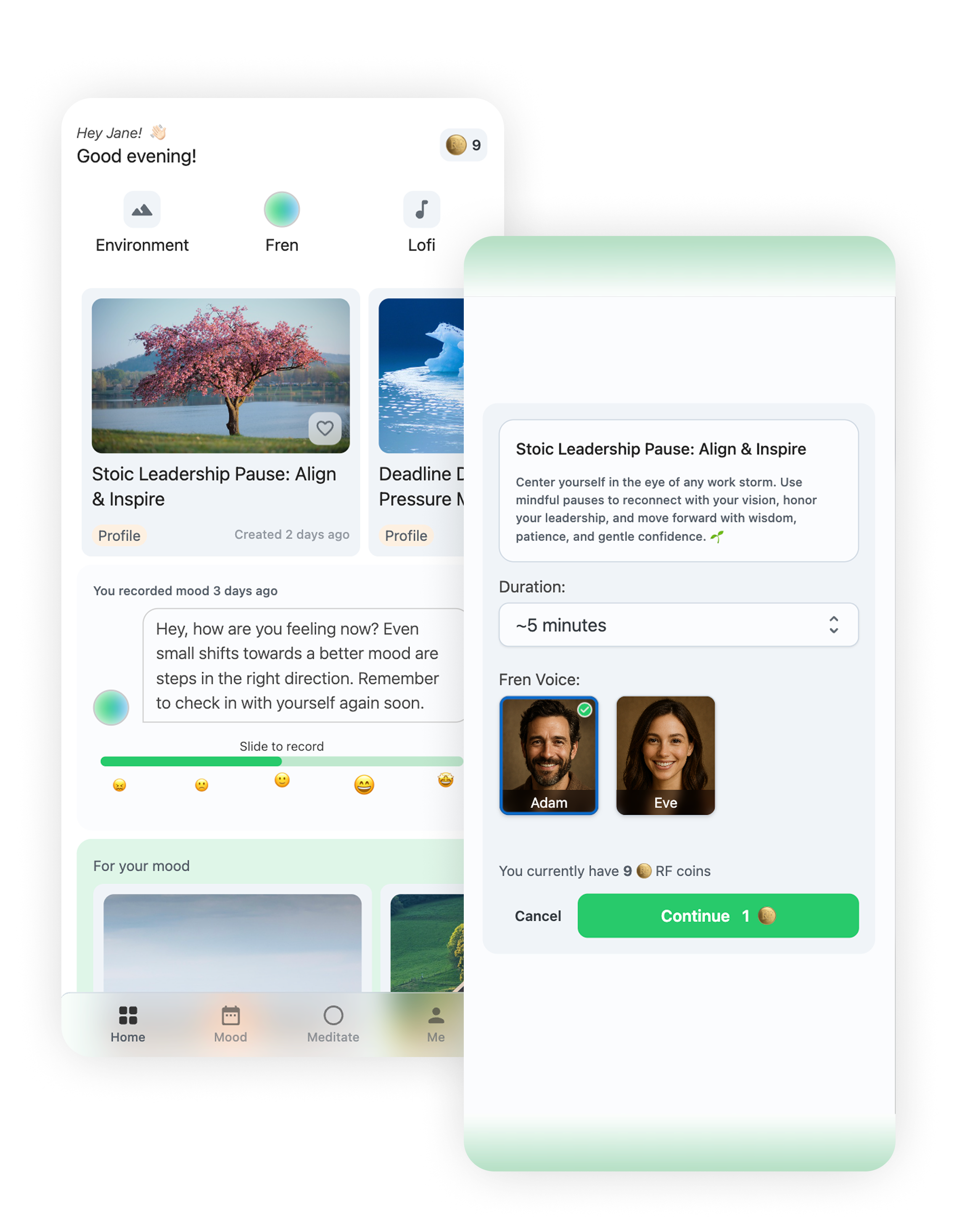
The most revolutionary technique in 2026. AI-powered meditation apps analyze your current emotional state, stress levels, and preferences to generate custom meditation sessions in real-time. Instead of choosing from pre-made tracks, the AI creates a meditation specifically for you, right now.
Best for: Beginners who want guidance, busy professionals, and anyone seeking personalized mindfulness practice.
Mindfulness Meditation
Focus on the present moment without judgment. Observe your thoughts, feelings, and sensations as they arise and pass. This technique builds awareness and helps you respond to life's challenges with greater clarity and calm.
Best for: Stress reduction, emotional regulation, and developing present-moment awareness.
Body Scan Meditation
Systematically bring attention to different parts of your body, noticing sensations without judgment. This technique is excellent for improving sleep and releasing physical tension.
Best for: Physical relaxation, sleep improvement, and body awareness.
Loving-Kindness Meditation (Metta)
Cultivate feelings of love, compassion, and kindness toward yourself and others. Start by directing well-wishes to yourself, then expand to loved ones, acquaintances, and eventually all beings. This practice enhances empathy and emotional wellbeing.
Best for: Improving relationships, reducing negative emotions, and increasing self-compassion.
Breathwork Meditation
Use specific breathing patterns to influence your nervous system and mental state. Techniques like box breathing (4-4-4-4), alternate nostril breathing, and deep diaphragmatic breathing can quickly shift your energy and mood. Learn more about breathing exercises for meditation.
Best for: Quick stress relief, energy management, and anxiety reduction.
When to Meditate: Finding Your Optimal Time
The best time to meditate depends on your goals and schedule. Modern AI meditation apps can help you find the optimal time based on your patterns:
🌅 Morning Meditation (6-8 AM)
Sets a positive tone for your day, increases energy and focus, and helps you approach challenges with greater clarity. Perfect for intention-setting and building momentum.
☀️ Afternoon Meditation (2-4 PM)
Recharges your energy during the afternoon slump, improves focus for the rest of the workday, and helps manage stress that accumulates throughout the morning.
🌙 Evening Meditation (7-9 PM)
Promotes relaxation and prepares your body for sleep. Excellent for processing the day's events and releasing tension. Ideal for sleep meditation practices.
Overcoming Common Meditation Challenges
Every meditator faces challenges. Here's how to handle the most common ones in 2026:
Challenge: "I can't stop thinking"
Solution: Thinking during meditation is normal and expected. The goal isn't to stop thoughts but to notice them without judgment and gently return to your focus point. Each time you redirect your attention, you're strengthening your mindfulness muscle. Use guided meditations that remind you to return to the present moment.
Challenge: "I don't have time"
Solution: Start with just 5 minutes. Even 2-3 minutes of meditation can make a difference. Use meditation apps designed for busy professionals that offer quick sessions. Schedule meditation like any other important appointment, and use AI-powered apps that adapt to your available time.
Challenge: "I fall asleep"
Solution: If you fall asleep, you might need more rest. Try meditating in an upright position, with your eyes slightly open, or at a different time of day. For evening meditation, falling asleep can actually be beneficial if your goal is better sleep.
Challenge: "I'm not seeing results"
Solution: Meditation benefits accumulate over time. Be patient and consistent. Track your progress with apps that monitor your mood, stress levels, and meditation streaks. Sometimes the benefits are subtle – better sleep, more patience, less reactivity – rather than dramatic transformations.
Building a Sustainable Meditation Practice
Consistency is more important than perfection. Here's how to build a meditation habit that sticks:
Start Small and Build Gradually
Commit to just 5 minutes daily for the first week. Once that feels natural, increase to 10 minutes, then 15. Small, consistent practice beats long, sporadic sessions.
Use Habit Stacking
Attach meditation to an existing habit. Meditate right after your morning coffee, before brushing your teeth at night, or during your lunch break. This creates a natural trigger that makes the habit automatic.
Leverage Technology
Use AI-powered meditation apps that send reminders, track your streaks, and adapt to your schedule. These apps make it easier to maintain consistency and see your progress over time.
Be Flexible, Not Perfect
Missed a day? That's okay. Don't let perfectionism derail your practice. Return to meditation the next day without judgment. The goal is progress, not perfection.
Advanced Meditation Techniques for Experienced Practitioners
If you've been meditating for a while and want to deepen your practice, try these advanced techniques:
Open Awareness Meditation
Instead of focusing on a single object (like breath), rest in open awareness. Notice whatever arises in your field of consciousness – sounds, sensations, thoughts – without attaching to any of them. This develops equanimity and non-reactive awareness.
Insight Meditation (Vipassana)
Investigate the nature of reality through direct observation. Notice the impermanent, unsatisfactory, and selfless nature of all phenomena. This practice leads to deep insights and wisdom.
Metta (Loving-Kindness) Extended Practice
Expand your loving-kindness practice to include difficult people, neutral people, and eventually all beings. This advanced practice transforms your relationship with yourself and others.
Walking Meditation
Bring mindfulness to movement. Walk slowly and deliberately, paying attention to each step, the sensation of your feet touching the ground, and the movement of your body. This integrates meditation into daily activities.
How Technology is Revolutionizing Meditation in 2026
Technology has made meditation more accessible and effective than ever. Here's how modern tools can enhance your practice:
The Future of Meditation: AI-Powered Personalization
🤖 Real-Time Adaptation
Modern AI meditation apps analyze your emotional state, stress patterns, and meditation history to create personalized sessions that adapt in real-time. No more guessing which meditation you need – the AI knows.
📊 Progress Tracking
Advanced apps track your meditation streaks, mood improvements, stress reduction, and sleep quality. This data helps you see tangible results and stay motivated.
🎯 Goal-Oriented Practice
Whether you want to reduce stress, improve sleep, enhance focus, or manage anxiety, AI-powered apps create meditation programs specifically designed to help you achieve your goals. Learn more about personalized meditation for mood and stress.
⏰ Flexible Scheduling
Smart apps adapt to your schedule, offering quick 5-minute sessions when you're busy and longer 20-minute practices when you have time. They learn your patterns and suggest optimal meditation times.
Ready to Start Your Meditation Journey?
Experience the future of meditation with RelaxFrens – an AI-powered meditation app that adapts to your emotions, stress levels, and goals in real-time. Get personalized guidance that evolves with you.
Conclusion: Your Meditation Journey Starts Now
Meditation in 2026 is more accessible, personalized, and effective than ever before. Whether you're a complete beginner or an experienced practitioner, modern tools and techniques can help you build a sustainable practice that fits your lifestyle and goals.
Remember: the best meditation practice is the one you actually do. Start small, be consistent, and be kind to yourself. With the help of AI-powered meditation apps and the techniques outlined in this guide, you have everything you need to begin or deepen your meditation journey.
Ready to take the next step? Explore how to build a daily meditation habit or discover the best meditation apps to support your practice.
If this was useful, pass it along to someone who might need it.

Start a personalised meditation practice
An AI meditation app that builds customised sessions for your mood, stress, and sleep.
Ready to try a personalised meditation app?
RelaxFrens is an AI meditation app that creates customised sessions for your mood, stress, and sleep — not a fixed catalogue of the same tracks.
30-day money-back guarantee · Cancel anytime