High-Functioning Anxiety: Signs You're Stressed but Hiding It
Do you achieve a lot but feel constantly on edge? How to spot and manage high-functioning anxiety with mindfulness.
By RelaxFrens Team
January 24, 2026
24 min read
You're the one who always delivers. The person who never misses a deadline, who volunteers for extra projects, who seems to have it all together. Your calendar is full, your achievements are impressive, and from the outside, everything looks perfect. But inside? You feel like you're constantly running on a treadmill that's set just a little too fast. Your mind races even when you're trying to relax. You worry about things that haven't happened yet—and probably never will. You achieve a lot, but you feel constantly on edge.
If this sounds familiar, you might be experiencing high-functioning anxiety—a form of anxiety that allows you to maintain your responsibilities and appear successful while struggling internally with persistent worry, perfectionism, and stress. Unlike more visible forms of anxiety that might prevent you from functioning, high-functioning anxiety often drives productivity and achievement, making it easy to dismiss or ignore. But just because you're functioning doesn't mean you're thriving.
In this comprehensive guide, we'll explore the signs of high-functioning anxiety, how it differs from other forms of anxiety, and most importantly, how to recognize and manage it using evidence-based mindfulness and meditation techniques. Whether you've been silently struggling with anxiety for years or you're just beginning to notice patterns of stress and worry, this guide will help you understand what's happening and provide practical tools for finding relief.
What is High-Functioning Anxiety?
High-functioning anxiety isn't an official clinical diagnosis, but rather a term used to describe individuals who experience significant anxiety symptoms while maintaining their ability to function in work, relationships, and daily life. These individuals often appear successful, capable, and put-together—which can make their anxiety less visible to others and even to themselves.
The Paradox of High-Functioning Anxiety
What makes high-functioning anxiety particularly challenging is that the anxiety itself often drives the high achievement. The constant worry about not being good enough, the fear of failure, and the need to control outcomes can create a cycle where:
Anxiety Fuels Productivity
The fear of failure or disappointing others drives you to work harder, stay later, and take on more responsibilities
Success Masks the Problem
Because you're achieving goals and meeting expectations, it's easy to dismiss your anxiety as "just how you are" or "the price of success"
The Cycle Continues
Each achievement temporarily relieves anxiety, but the underlying worry returns, requiring more achievement to feel okay—creating an unsustainable cycle
This doesn't mean that high-functioning anxiety is "better" than other forms of anxiety—it simply means it's less visible. The internal suffering is just as real, and the long-term consequences (burnout, physical health issues, relationship problems) can be just as serious. The good news is that recognizing high-functioning anxiety is the first step toward managing it effectively.
Signs You Might Have High-Functioning Anxiety
High-functioning anxiety can manifest in many ways, and the signs aren't always obvious—especially if you've been living with it for a long time. Here are the most common indicators:
Common Signs of High-Functioning Anxiety
Constant Worry and Overthinking
Your mind races with "what if" scenarios, even when things are going well. You replay conversations, anticipate problems, and struggle to quiet your thoughts, especially at night.
Perfectionism and Fear of Failure
You set extremely high standards for yourself and feel anxious when you can't meet them. Mistakes feel catastrophic, and you spend excessive time perfecting tasks that others might consider "good enough."
Difficulty Relaxing
You feel guilty or restless when you're not being productive. Even during downtime, your mind is planning, worrying, or thinking about what needs to be done next.
Physical Symptoms
You experience muscle tension, headaches, digestive issues, or other physical symptoms of stress. These may be chronic or flare up during particularly stressful periods.
Sleep Problems
Despite being exhausted, you struggle to fall asleep or stay asleep because your mind won't shut off. You might wake up in the middle of the night worrying about things.
People-Pleasing Tendencies
You have difficulty saying no and often take on more than you can handle to avoid disappointing others. You worry excessively about what others think of you.
Procrastination Followed by Intense Work
You might procrastinate on tasks because the anxiety of starting feels overwhelming, then work frantically to complete them at the last minute—often producing excellent results despite the stress.
Irritability and Mood Swings
You might snap at loved ones or feel overwhelmed by small inconveniences. The constant internal pressure makes you more reactive to external stressors.
It's important to note that having some of these signs doesn't necessarily mean you have high-functioning anxiety—many people experience these symptoms occasionally. However, if you recognize several of these patterns and they're consistently impacting your quality of life, it may be worth exploring further.
How High-Functioning Anxiety Differs from Other Forms of Anxiety
Understanding how high-functioning anxiety differs from other anxiety disorders can help you better recognize what you're experiencing and seek appropriate support.
High-Functioning Anxiety
Maintains ability to function in work and daily life
Often appears successful and capable
Anxiety may drive productivity and achievement
Internal distress may not be visible to others
May dismiss or minimize their anxiety
Traditional Anxiety Disorders
May significantly impair daily functioning
Symptoms are often more visible and recognized
May avoid situations or responsibilities due to anxiety
More likely to seek professional help
Anxiety typically interferes with goals rather than driving them
It's worth noting that high-functioning anxiety can sometimes develop into more severe anxiety disorders if left unaddressed. The constant stress and internal pressure can eventually lead to burnout, depression, or more debilitating anxiety. This is why recognizing and managing high-functioning anxiety early is so important.
How Mindfulness and Meditation Can Help
Research consistently shows that mindfulness and meditation are among the most effective tools for managing anxiety. Studies have found that regular mindfulness practice can reduce anxiety symptoms by up to 60% and improve emotional regulation, stress resilience, and overall well-being.
Why Mindfulness Works for High-Functioning Anxiety
Mindfulness and meditation address high-functioning anxiety at its core by:
Breaking the Cycle of Overthinking
Mindfulness teaches you to observe your thoughts without getting caught up in them. Instead of spiraling into worry, you learn to notice anxious thoughts and let them pass without judgment
Reducing Physical Symptoms
Meditation activates your parasympathetic nervous system (the "rest and digest" response), reducing muscle tension, lowering heart rate, and calming the physical symptoms of anxiety
Improving Emotional Regulation
Regular practice helps you develop greater awareness of your emotions and the ability to respond to stress more skillfully, rather than reacting impulsively
Creating Space for Rest
For people with high-functioning anxiety who struggle to relax, meditation provides a structured way to practice being still and present, helping you develop the skill of rest
Best Meditation Practices for High-Functioning Anxiety
Not all meditation practices are created equal when it comes to managing anxiety. Here are the most effective approaches for high-functioning anxiety:
Mindfulness Meditation
This practice involves bringing your attention to the present moment, typically by focusing on your breath. When anxious thoughts arise, you simply notice them and return your attention to your breath. This helps break the cycle of worry and rumination.
Try starting with just 5-10 minutes per day. Use guided meditation apps if you're new to the practice.
Body Scan Meditation
This practice involves systematically bringing awareness to different parts of your body. It's particularly effective for high-functioning anxiety because it helps you notice and release physical tension you might not even be aware of.
Body scan meditations are especially helpful before bed if you struggle with sleep due to anxiety. Check out our guided sleep meditations.
Walking Meditation
If sitting still feels impossible (which is common with high-functioning anxiety), walking meditation can be a great alternative. You focus on the sensations of walking while maintaining present-moment awareness.
Learn more about walking meditation techniques that work for busy, anxious minds.
Breathing Exercises
Simple breathing exercises can be done anywhere, anytime you feel anxious. The 4-7-8 breathing technique (inhale for 4, hold for 7, exhale for 8) is particularly effective for quickly reducing anxiety symptoms.
These can be especially helpful during work meetings, before presentations, or any time you need quick anxiety relief.
Practical Strategies for Managing High-Functioning Anxiety
While meditation and mindfulness are powerful tools, managing high-functioning anxiety requires a comprehensive approach. Here are practical strategies you can implement starting today:
Establish a Daily Meditation Practice
Start with just 5-10 minutes per day. Use personalized meditation apps that adapt to your mood and stress levels. Consistency is more important than duration—even a few minutes daily can make a significant difference.
Set Healthy Boundaries
Learn to say no. High-functioning anxiety often involves people-pleasing and overcommitting. Practice identifying your limits and communicating them clearly. Remember: saying no to others is saying yes to yourself.
Prioritize Sleep
Poor sleep exacerbates anxiety. Aim for 7-9 hours of quality sleep per night. Create a relaxing bedtime routine, avoid screens before bed, and consider using sleep meditation if your mind races at night. Check out our complete guide to sleep hygiene for more tips.
Challenge Perfectionism
Practice "good enough" thinking. Set time limits for tasks and commit to stopping when the time is up, even if it's not perfect. Remind yourself that perfectionism is often a form of procrastination and anxiety, not a path to excellence.
Limit Caffeine and Alcohol
Caffeine can exacerbate anxiety symptoms, and while alcohol might feel like it helps you relax, it actually disrupts sleep and can increase anxiety the next day. Be mindful of how these substances affect you.
Practice Self-Compassion
High-functioning anxiety often involves harsh self-criticism. Practice treating yourself with the same kindness and understanding you would offer a friend. When you notice self-critical thoughts, gently redirect them with self-compassion.
When to Seek Professional Help
While self-help strategies can be effective, there are times when professional support is essential. Consider seeking help from a mental health professional if:
Your anxiety significantly impacts your quality of life, relationships, or work performance
You experience physical symptoms that interfere with daily activities
You have difficulty sleeping for extended periods
You use substances (alcohol, drugs, or medications) to cope with anxiety
You have thoughts of self-harm or suicide
Your relationships are suffering due to anxiety
You feel overwhelmed and unable to manage on your own
A mental health professional can provide evidence-based treatments such as Cognitive Behavioral Therapy (CBT), mindfulness-based therapy, or other approaches tailored to your specific needs. They can also help determine if medication might be beneficial. Remember: seeking help is a sign of strength and self-awareness, not weakness.
Start Your Journey to Calm with Personalized Meditation
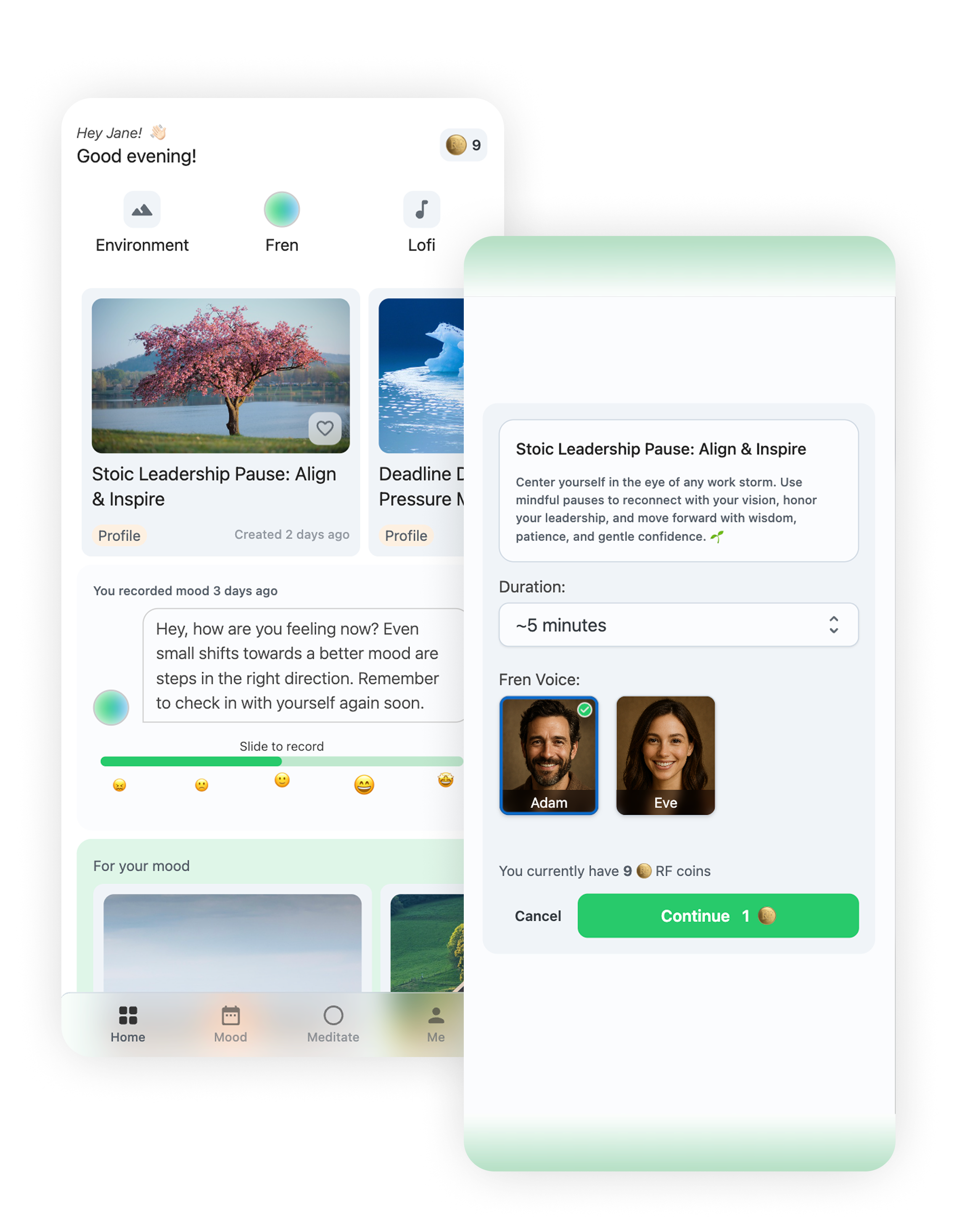
Managing high-functioning anxiety starts with awareness and consistent practice. RelaxFrens offers AI-powered personalized meditation that adapts to your mood, stress levels, and anxiety patterns. Our mindfulness techniques are designed specifically for busy, high-achieving individuals who need practical tools for managing anxiety. Start your meditation journey today and discover how mindfulness can help you find peace without sacrificing your drive for excellence.
You Don't Have to Choose Between Success and Peace
High-functioning anxiety can make you feel like you have to choose between being successful and being at peace. But that's a false choice. With the right tools and strategies, you can maintain your drive for excellence while also finding calm, rest, and genuine well-being.
The first step is recognizing what you're experiencing. If you've been living with high-functioning anxiety, you might have normalized the constant worry, the difficulty relaxing, the physical tension. But these aren't inevitable parts of being a high achiever—they're signs that your nervous system needs support.
Mindfulness and meditation aren't about becoming less driven or less ambitious. They're about developing the skills to manage stress, regulate emotions, and find balance. When you learn to work with your anxiety rather than against it, you can channel that energy more effectively and sustainably.
Start small. Commit to just 5-10 minutes of meditation or mindfulness practice each day. Use personalized meditation apps that adapt to your needs. Practice setting boundaries. Prioritize sleep. Be patient with yourself—managing anxiety is a journey, not a destination.
Remember: you don't have to do this alone. Whether you choose to work with a therapist, use meditation apps, or practice on your own, support is available. The most important thing is to start. Your future self—the one who can achieve great things while also feeling genuinely calm and at peace—is waiting for you to take that first step.
If this was useful, pass it along to someone who might need it.
Start a personalised meditation practice
An AI meditation app that builds customised sessions for your mood, stress, and sleep.
Ready to try a personalised meditation app?
RelaxFrens is an AI meditation app that creates customised sessions for your mood, stress, and sleep — not a fixed catalogue of the same tracks.
30-day money-back guarantee · Cancel anytime