Guided vs. Unguided Meditation: Which is Right for You?
Struggling to choose? We compare guided meditation apps vs. silent practice to help you find the perfect relaxation style for your personality.
By RelaxFrens Team
February 20, 2026
18 min read
You've decided to start meditating—or maybe you've been practicing for a while. But there's a question that keeps coming up: should you use guided meditation apps with step-by-step instructions, or practice silent, unguided meditation on your own?
This isn't just a matter of preference—it's about finding the meditation style that aligns with your personality, experience level, and goals. The choice between guided and unguided meditation can significantly impact your practice's effectiveness, consistency, and enjoyment.
In this comprehensive guide, we'll explore the differences between guided and unguided meditation, help you understand which approach suits your needs, and show you how modern AI-powered meditation technology is bridging the gap between these two styles. Whether you're a complete beginner or an experienced practitioner, you'll discover the perfect meditation approach for your unique journey.
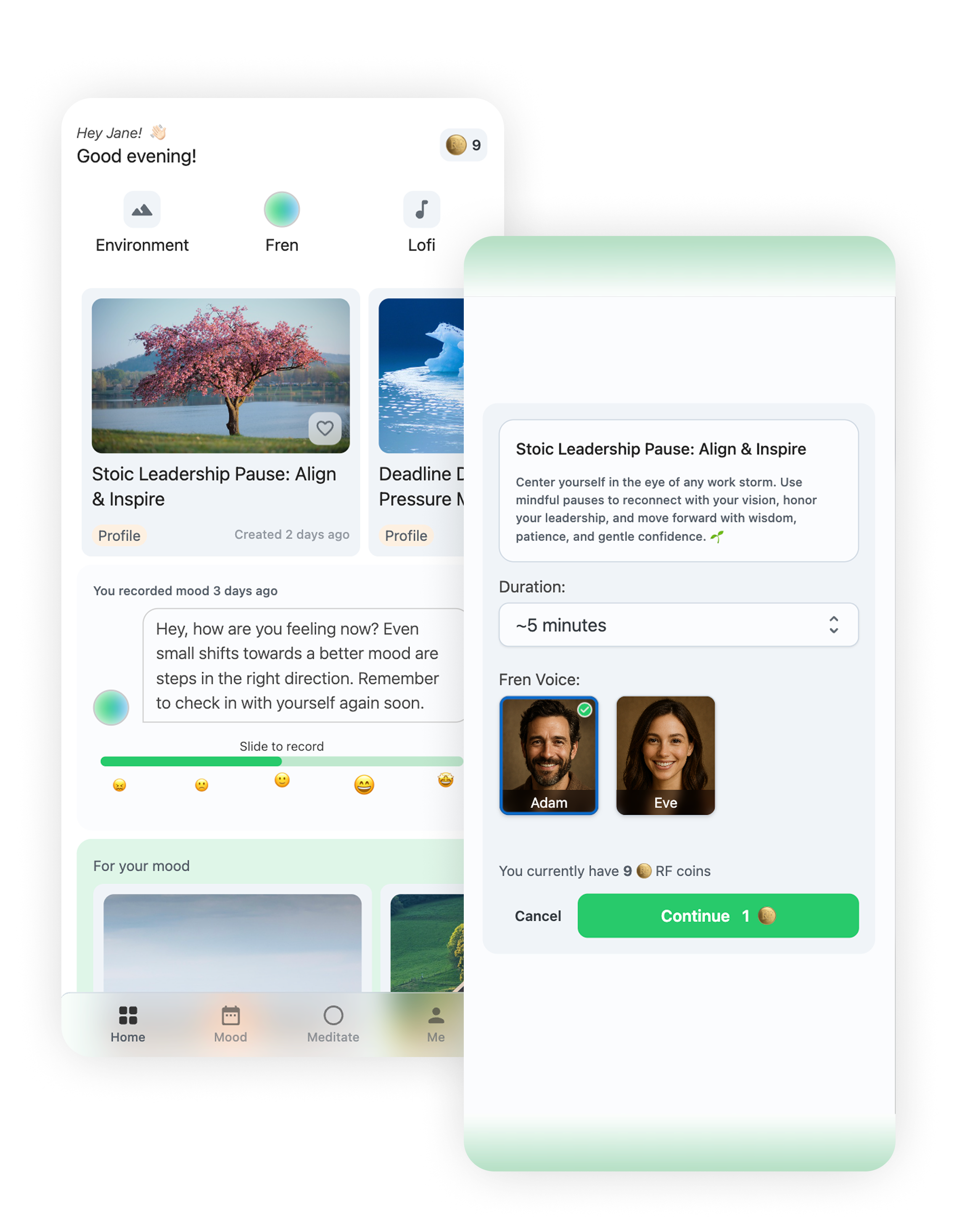
What is Guided Meditation?
Guided meditation involves following verbal instructions from a teacher, app, or audio recording throughout your practice. Think of it as having a meditation coach walking you through each step—from finding your breath to navigating thoughts and emotions.
Key Characteristics of Guided Meditation:
Verbal Instructions
Step-by-step guidance throughout the session, from beginning to end
Structured Practice
Clear beginning, middle, and end with specific techniques and timing
Technique Learning
Teaches specific meditation methods like body scan, loving-kindness, or breath awareness
Focus Support
Helps maintain attention and gently redirects when your mind wanders
What is Unguided Meditation?
Unguided meditation—also called silent meditation or self-directed practice—is meditation you do independently without external instructions. You set your own intention, choose your focus point (like your breath), and navigate the practice on your own.
Key Characteristics of Unguided Meditation:
Complete Independence
No external instructions—you direct your own practice from start to finish
Flexible Structure
You decide the duration, technique, and focus of each session
Self-Reliance
Develops internal guidance and strengthens your ability to meditate independently
Minimal Technology
Can be practiced anywhere, anytime, without apps, headphones, or recordings
Guided vs. Unguided Meditation: Side-by-Side Comparison
Understanding the differences helps you make an informed choice. Here's a comprehensive comparison:
Best For Beginners
✅ Guided Meditation
Provides structure, reduces anxiety about technique, offers step-by-step learning. Ideal for those who feel lost without direction.
⚠️ Unguided Meditation
Can feel overwhelming for beginners who don't know where to start or how to handle wandering thoughts.
Focus and Attention
✅ Guided Meditation
External voice helps maintain focus and gently redirects attention when mind wanders. Easier to stay present.
✅ Unguided Meditation
Develops stronger self-discipline and internal focus. You learn to notice and redirect attention independently.
Flexibility and Convenience
⚠️ Guided Meditation
Requires app, headphones, or recording. Less flexible if you want to meditate spontaneously or in quiet environments.
✅ Unguided Meditation
Can practice anywhere, anytime, without technology. Maximum flexibility for spontaneous or scheduled sessions.
Learning and Technique Development
✅ Guided Meditation
Excellent for learning new techniques, understanding meditation principles, and receiving expert instruction.
⚠️ Unguided Meditation
Requires prior knowledge of techniques. Best for those who already understand meditation fundamentals.
Independence and Self-Reliance
⚠️ Guided Meditation
Relies on external guidance. May create dependency on apps or teachers for practice.
✅ Unguided Meditation
Builds complete self-reliance. Develops internal guidance and ability to meditate independently in any situation.
Benefits of Guided Meditation
Guided meditation offers unique advantages, especially for beginners and those seeking structure. Here's why millions of people choose guided practice:
Easier Learning for Beginners
Step-by-step instructions eliminate guesswork. You learn proper techniques, breathing patterns, and meditation principles without feeling lost or confused. This is especially valuable when starting your meditation journey.
Reduced Anxiety About Technique
Many beginners worry about "doing it wrong." Guided meditation provides reassurance and validation, reducing performance anxiety and allowing you to relax into the practice.
Better Focus Maintenance
The guiding voice acts as an anchor, helping you stay present. When your mind wanders, the instructions gently bring you back, making it easier to maintain focus throughout longer sessions.
Variety of Techniques
Guided meditations introduce you to diverse practices: body scan, loving-kindness, visualization, breathwork, and more. You can explore different approaches without needing to research or learn them independently.
Emotional Support and Validation
The teacher's voice provides comfort and reassurance. Guided meditations often acknowledge common experiences (like mind-wandering) and normalize them, reducing self-judgment.
Goal-Oriented Practice
Many guided meditations target specific goals: better sleep, stress relief, anxiety reduction, or focus improvement. You can choose sessions designed for your current needs.
Benefits of Unguided Meditation
Unguided meditation offers freedom and independence that many experienced practitioners value. Here are the key advantages:
Complete Independence
No reliance on technology, apps, or external guidance. You can meditate anywhere, anytime, with complete freedom to adapt your practice to your current state and needs.
Deeper Self-Awareness
Without external instructions, you develop stronger internal awareness. You learn to notice your own patterns, thoughts, and sensations more deeply, fostering greater self-understanding.
Flexibility in Practice
You can adjust your practice in real-time based on how you feel. If you need more breath focus, you do it. If you want to explore body sensations, you shift naturally. No need to follow a predetermined script.
Stronger Self-Discipline
Unguided practice requires you to maintain focus and redirect attention independently. This builds mental discipline and self-control that extends beyond meditation into daily life.
Technology-Free Practice
Perfect for digital detox moments, quiet environments, or when you want to disconnect from screens. You can practice in nature, during travel, or in any setting without needing headphones or devices.
Development of Internal Guidance
Over time, you develop your own internal meditation guide. You learn to sense what you need in each moment and adjust your practice accordingly, creating a deeply personalized experience.
Who Should Choose Guided Meditation?
Guided meditation is ideal for specific types of practitioners and situations. You might benefit from guided practice if:
You're a Complete Beginner
If you've never meditated before, guided sessions provide essential structure and learning. You'll understand what to do, how to handle thoughts, and what meditation should feel like.
You Prefer Structure and Direction
If you feel lost or anxious without clear instructions, guided meditation provides the structure you need to feel confident in your practice.
You Struggle with Focus
If your mind wanders frequently and you find it difficult to maintain attention, the guiding voice acts as an anchor that helps you stay present.
You Want to Learn Specific Techniques
Guided meditations are excellent for learning body scan, loving-kindness, visualization, or other specific practices you want to master.
You're Dealing with Stress or Anxiety
When you're overwhelmed, guided meditation provides emotional support and structured practice that can be more accessible than trying to meditate independently.
Who Should Choose Unguided Meditation?
Unguided meditation suits practitioners who value independence and have established meditation fundamentals. Consider unguided practice if:
You're an Experienced Practitioner
If you've been meditating for months or years and understand the fundamentals, unguided practice offers freedom to deepen your experience.
You Prefer Independence
If you enjoy self-directed activities and want to develop your own internal guidance, unguided meditation aligns with your personality.
You Want Maximum Flexibility
If you want to meditate spontaneously, in nature, during travel, or in quiet environments without technology, unguided practice offers complete freedom.
You Have Strong Self-Discipline
If you can maintain focus and redirect attention independently, unguided meditation allows you to deepen your practice without external support.
You Want Deeper Introspection
If you're seeking deeper self-awareness and want to explore your internal landscape without external influence, unguided practice provides the space for profound introspection.
The Hybrid Approach: Using Both Guided and Unguided Meditation
You don't have to choose one approach exclusively. Many successful practitioners use both guided and unguided meditation strategically:
Strategic Hybrid Strategies
🎯 Start Guided, Transition to Unguided
Begin your meditation journey with guided sessions to learn techniques and build confidence. After 2-4 weeks of consistent guided practice, gradually introduce unguided sessions. Start with 5 minutes unguided, then increase as you feel comfortable.
⏰ Time-Based Approach
Use guided meditation in the morning for structure and energy, then practice unguided meditation in the evening for deeper introspection. Or use guided sessions on busy days when you need support, and unguided practice on relaxed days.
🎨 Mood-Based Selection
Choose guided meditation when you're stressed, distracted, or need emotional support. Use unguided practice when you feel centered, focused, and want to explore your internal landscape independently.
📚 Learning New Techniques
Use guided meditation to learn new techniques (like body scan or loving-kindness), then practice them unguided once you understand the fundamentals. This combines structured learning with independent practice.
The Future: AI-Powered Meditation That Adapts to Your Needs
Modern technology is revolutionizing the guided vs. unguided debate. AI-powered meditation apps like RelaxFrens are creating a new category: adaptive meditation that intelligently blends guidance with independence.
How AI Meditation Bridges the Gap
AI-powered meditation platforms analyze your current emotional state, stress levels, experience level, and preferences to create personalized sessions that adapt in real-time:
Adaptive Guidance Levels
More guidance when you're stressed or distracted, less guidance when you're focused and centered. The AI adjusts based on your real-time needs.
Personalized Technique Selection
The AI recommends specific meditation techniques based on your current mood, goals, and what's worked for you in the past. Learn more about personalized meditation for mood and stress.
Seamless Transitions
As you gain experience, the AI gradually reduces guidance, helping you transition naturally from guided to unguided practice at your own pace.
Best of Both Worlds
Get the structure and learning benefits of guided meditation when you need it, plus the independence and flexibility of unguided practice when you're ready.
How to Make Your Decision: A Practical Guide
Still unsure? Here's a practical approach to finding your perfect meditation style:
1️⃣
Start with Guided Meditation
If you're new to meditation, begin with guided sessions. This gives you structure, reduces anxiety, and helps you learn the fundamentals. Use quality meditation apps that offer well-produced guided sessions.
2️⃣
Practice Consistently for 2-4 Weeks
Build a daily habit with guided meditation. Notice how you feel during and after sessions. Pay attention to whether you enjoy the structure or find it restrictive. Learn more about building a meditation habit.
3️⃣
Experiment with Unguided Practice
After establishing consistency, try a 5-minute unguided session. Sit quietly, focus on your breath, and notice how it feels. Do you enjoy the independence, or do you miss the guidance?
4️⃣
Notice What Feels Natural
Pay attention to which approach feels more natural and effective. Do you prefer the structure of guided meditation, or the freedom of unguided practice? There's no wrong answer—only what works for you.
5️⃣
Create Your Hybrid Approach
Most successful practitioners use both approaches strategically. Use guided meditation when you need structure or support, and unguided practice when you want independence. Let your needs guide your choice each day.
Find Your Perfect Meditation Style with RelaxFrens
Experience the future of meditation with RelaxFrens—an AI-powered meditation app that adapts between guided and unguided styles based on your current needs, experience level, and goals. Get personalized guidance when you need it, and independence when you're ready.
The Bottom Line: There's No One "Right" Choice
The guided vs. unguided meditation debate isn't about finding the "correct" approach—it's about discovering what works for your unique personality, experience level, and goals. Both styles offer valuable benefits, and the best practitioners often use both strategically.
If you're a beginner, start with guided meditation to build confidence and learn techniques. As you develop your practice, experiment with unguided sessions to discover if independence enhances your experience. Most importantly, stay flexible—your needs may change from day to day, and your meditation practice should adapt accordingly.
Modern AI-powered meditation apps are making this choice easier by offering adaptive guidance that blends the best of both worlds. Whether you prefer guided structure, unguided independence, or a hybrid approach, the most important thing is to start practicing consistently and discover what resonates with you.
Ready to explore your perfect meditation style? Check out our guide on how to start your meditation journey, or discover the best meditation apps that offer both guided and unguided options. Your ideal practice is waiting to be discovered.
If this was useful, pass it along to someone who might need it.

Start a personalised meditation practice
An AI meditation app that builds customised sessions for your mood, stress, and sleep.
Ready to try a personalised meditation app?
RelaxFrens is an AI meditation app that creates customised sessions for your mood, stress, and sleep — not a fixed catalogue of the same tracks.
30-day money-back guarantee · Cancel anytime